Ethereum EIPs Case Study

Quick Highlights
- Shipped a site-wide mobile UX rescue across the EIPs standards site, impacting all the main pages and historical ones like ERC-721.
Project Background:
The Ethereum Improvement Proposals (EIPs) repository is the authoritative standards forum for the Ethereum ecosystem, governing how technical proposals are introduced, discussed, and adopted across a multi-billion-dollar global blockchain economy. Standards formalized here routinely extend beyond Ethereum itself, shaping conventions and implementations across other EVM-compatible blockchains and adjacent ecosystems that inherit or adapt Ethereum's specifications.
The repository contains some of the most influential standards in blockchain history, including ERC-721, which formally defined the concept and terminology of Non-Fungible Tokens (NFTs). Many ERCs originating here serve as foundational primitives for wallets, marketplaces, DeFi protocols, developer tooling, and infrastructure relied upon at global scale.
In addition to application-level standards, the EIPs process is the canonical pathway for proposing and coordinating Ethereum protocol upgrades and network forks, providing a shared framework that the broader ecosystem - core developers, client teams, infrastructure providers, and enterprises - generally aligns around.
The repository is a high-activity hub for ongoing standards development and collaboration, with continuous contributions focused primarily on protocol design and specification rather than site maintenance or structure, reinforcing its role as shared technical ground truth for Ethereum and the wider EVM landscape.
Problem Uncovered:
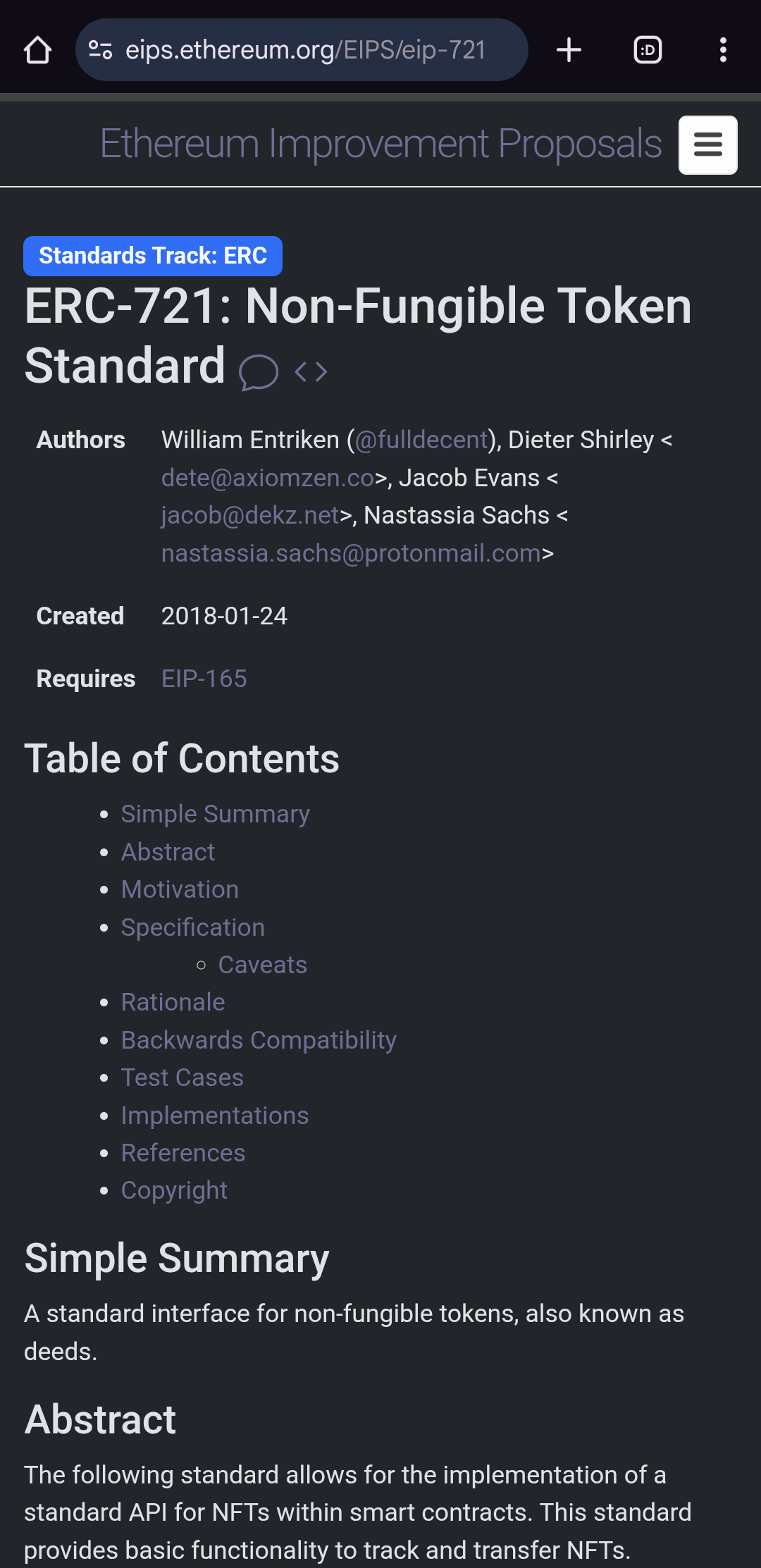
For years, the EIPs site had a persistent mobile layout problem: on mobile screen sizes, certain content (long lines of text, links, code blocks, and tables) could break out of the normal page container, forcing the entire page wider than the viewport and creating horizontal scrolling and awkward layouts. This impaired accessibility and made navigation challenging. Rito had noticed this behavior in passing over time, but the true scope was not understood, and it had not been formally raised or tracked in GitHub as a systemic issue.
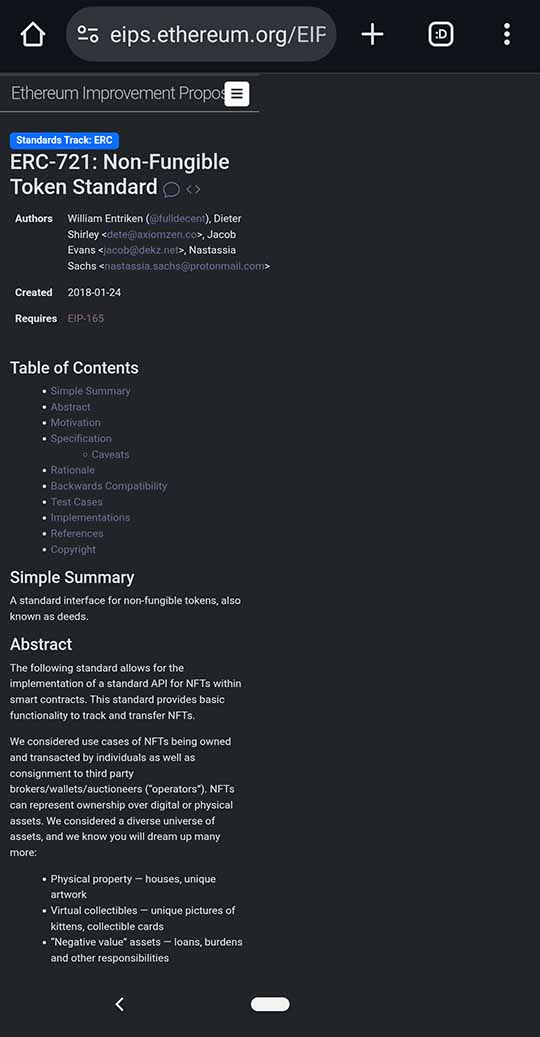
Screenshot of ERC-721 page with broken layout on mobile
On September 18, 2025, Rito opened the first formal issue and, on his own initiative, performed a structured audit to determine how widespread the breakage really was. That investigation revealed the problem was not limited to a handful of edge-case pages; it affected 100+ pages, including major category pages and heavily referenced core standards. He catalogued affected pages, noted that some were more severely impacted than others, and documented that the underlying causes were systemic and repeatable, rooted in how shared layout and styling handled overflow on mobile rather than isolated content mistakes.
Notably, high-visibility specifications were impacted, including ERC-20 and ERC-721, foundational documents that are routinely cited across the ecosystem and frequently used as reference points by developers, companies, and standards authors.
The Solution:
Rito translated the audit into a single systemic fix that made the site resilient to long, unbroken content on small screens. Instead of patching individual pages, he updated the shared layout and overflow rules in the site’s core styles so that long links, code blocks, tables, and other wide elements no longer pushed the document beyond the mobile viewport.
He submitted the change as a pull request with a detailed breakdown and a live demo to validate the behavior. After maintainer review, it was merged into the canonical EIPs repo, and also merged in the dependent ERCs repo. Once deployed, the fix removed horizontal scrolling on affected pages and reduced the risk of the same class of layout regressions as new standards are added, improving baseline usability and accessibility across one of the ecosystem’s most heavily referenced documentation sites.
Maintainers thanked him for the contribution and invited him to apply the same lens to the upcoming Working Group version of the site.