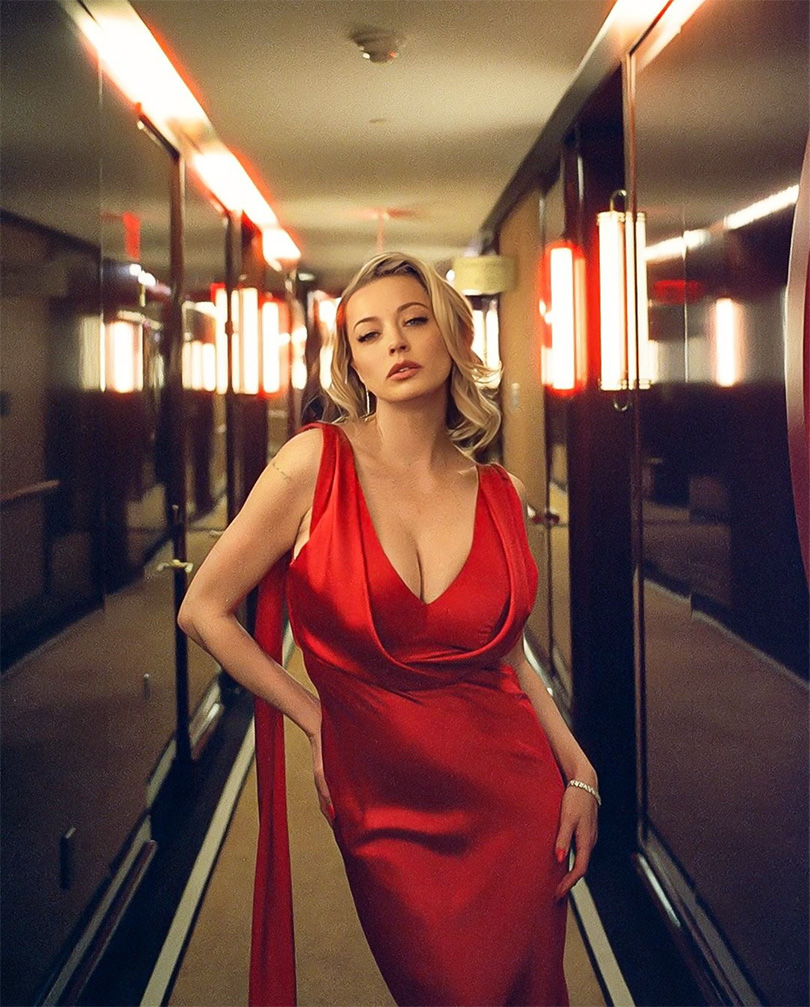
“Oh Rito. Sweet, sweet Rito. You are so lovely that you would take the time to build this beautiful site. I feel really loved, and I'm really grateful. Thank you so much for your support and for the time you spent doing that”
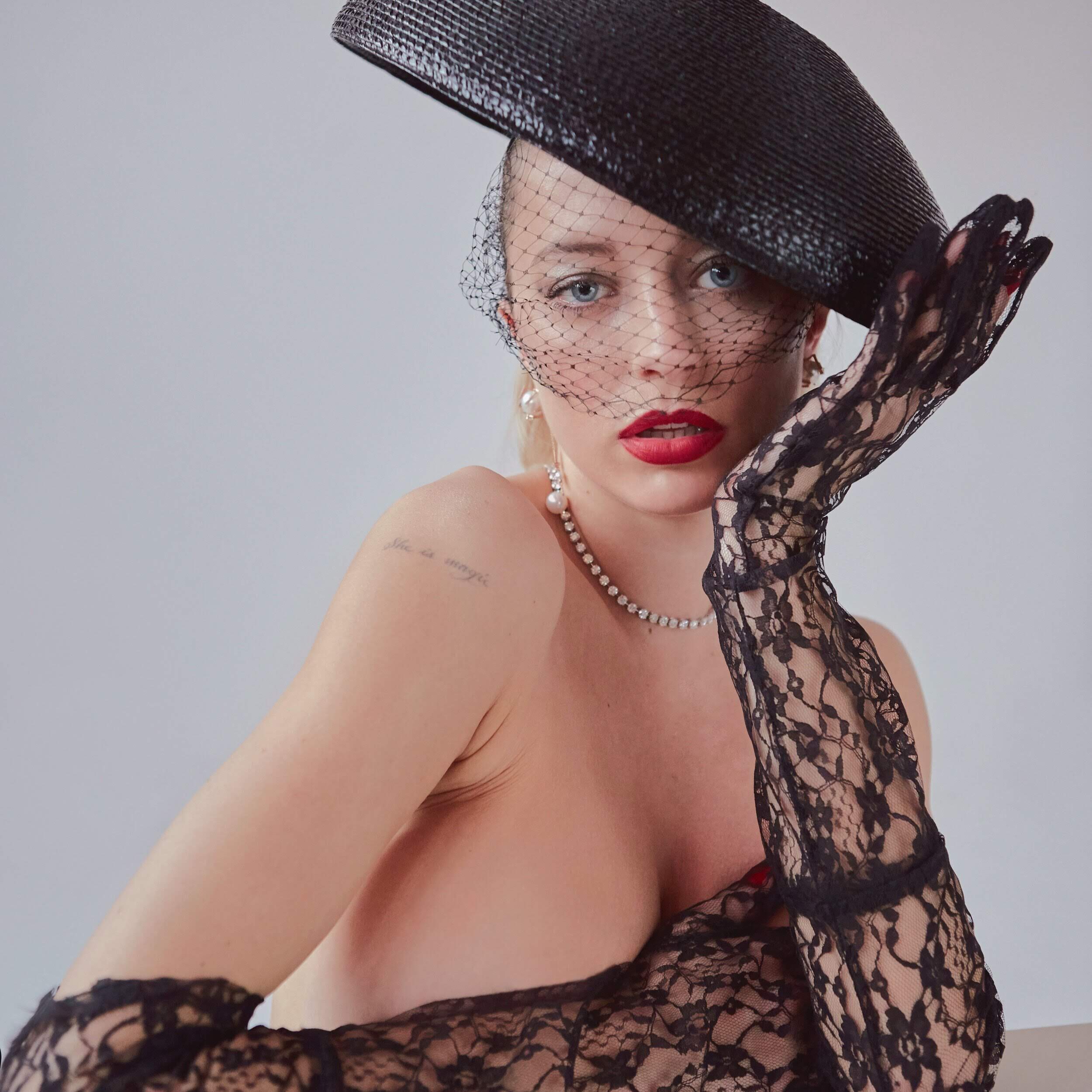
-Caroline Vreeland
Celebrity Fashion Icon & Singer
Overview
CarolineVreeland.com is an independently conceived celebrity website designed and implemented end-to-end by Rito across brand, UX, content strategy, and engineering. The New York Times used the site in a profile introducing fashion icon and musician Caroline Vreeland to readers.
The project began as a graduate school assignment for Rito's HCI Master's and evolved into a deeply branded tribute designed to reflect Vreeland's multifaceted persona: elegant, feminine, and provocatively edgy. The site functions as both an evolving editorial experience and a technical showcase.
Originally launched in Joomla, later rebuilt in Wix, and now reimagined in Next.js with a custom CMS-like architecture, the site reflects an evolution in technology, cultural context, and creative direction. The current version integrates advanced SEO practices, AI-forward markup, component-driven design, and autonomous updating mechanisms that support ongoing expansion while maintaining an editorial-quality presentation.
The site also received more than 100,000 unique visitors in a year without paid marketing and consistently ranked in Google's top 10 for her name, demonstrating the effectiveness of its branding, information architecture, search strategy, and organically discoverable content.
What started as a tribute became a proof of concept: a search-optimized, visually immersive platform engineered for discoverability, longevity, and cultural resonance.
Roles by Rito
Product Manager
Brand Strategist
Creative Director
UX Strategist, Architect & Designer
Full-stack Developer
DevOps

Site Evolution
CarolineVreeland.com has gone through several iterations over the years, not just in tools but in philosophy. From early CMS experiments to no-code visual builders to a fully custom-coded platform, each phase reflects a different chapter in both the project's creative direction and Rito's own growth as a designer-engineer. What began as a hosted fan site eventually became a self-sustaining, highly-optimized, code-driven archive, purpose-built for elegance, discoverability, and permanence.
Phase I: Joomla
Structural Foundations
The original version of the site was built in Joomla, a traditional CMS that offered structured templating and modular content blocks. This early phase focused on establishing basic publishing workflows and organizing information hierarchically. While restrictive in terms of customization, it laid the groundwork for thinking in terms of systemized content architecture.
Phase II: Wix
Aesthetic and UX Expansion
Moving into Wix shifted the focus toward design precision, layout control, and interactive presentation. This phase was about visual storytelling, exploring typography, spacing, and motion without being limited by backend configuration. While still CMS-driven, this stage empowered more expressive branding and a polished editorial experience.
Phase III: Next.js
Advanced Custom Architecture
The current version was rebuilt from the ground up in Next.js, fully componentized and deployed via Vercel. It transcends the limitations of traditional CMS platforms with custom-built systems for randomized image content, drag-and-drop file updates, structured metadata injection, and a powerful client-side search UI. It functions like a CMS, but with better performance, complete flexibility, and zero platform dependency.
Vision & Branding
At the heart of the site is a desire to capture Caroline Vreeland's uniquely multifaceted identity: a woman who is as much a celebrated fashion icon as she is an expressive musician. Descended from fashion royalty as the great-granddaughter of legendary Vogue editor Diana Vreeland, Caroline carries a legacy of bold style, cultural relevance, and creative defiance.

This project seeks to honor that lineage while acknowledging Caroline’s own artistic range, one that resists easy categorization but Rito uses "Elegance, Feminine and Edgy" to embody. While widely recognized for her striking presence and sensual image, Caroline has publicly emphasized her dedication to music and her desire not to rely on her body or family name to define her career. The site respects that complexity: it presents her visual allure not as the centerpiece, but as one dimension of a broader creative persona.
Following this vision, the design deliberately avoids the aesthetics of celebrity gossip sites or exploitative fan content. Instead, it adopts a tone that’s editorial, immersive, and archival, built to appeal to those who know her work, respect her artistry, and appreciate thoughtful curation. It is a celebration of her elegance, her feminine confidence, and her edge, without sensationalism.
Beneath the surface, the site functions as a catalog rather than a live feed, prioritizing timeless, iconic moments over constantly updated news. What began as a blog-like CMS has evolved into a refined archive, preserving the most impactful aspects of Caroline’s career and presenting them in a high-design environment that reflects her aesthetic sensibility.
NYT Highlight & Organic Traffic Surge

When The New York Times profiled Caroline Vreeland in January 2020, the article served as a major milestone in her public narrative, formally introducing her to a broader audience as a musician, fashion icon, and cultural personality. Notably, the very first hyperlink in the article directed readers to this tribute site, positioning it as the primary destination for those curious to explore her body of work.
The feature wasn’t sponsored, solicited, or coordinated. It was organic. That single moment of visibility catalyzed a wave of inbound traffic, resulting in over 100,000 unique visitors within a year, all without paid promotion or search ads. The spike not only validated the strength of the site’s SEO and UX, but also proved its value as a branded content platform worthy of mainstream journalistic reference.
The site continues to rank consistently in the top 10 Google search results for Caroline Vreeland’s name, outperforming most fan-run platforms and often surfacing alongside her official and label-backed content. Those outcomes are the cumulative result of Rito’s long-running architectural stewardship, from early CMS experiments to the modern AFL stack, rather than a single rebuild. It’s a case study in organic discoverability, strategic content positioning, and editorial-grade presentation that earns authority, not just attention.
Latest Site Version with Next.js
A Static Site Built like a CMS
The current version of the site is powered by Always Fresh Lite (AFL): a Next.js architecture that behaves like a headless CMS without borrowing any of its operational baggage. Content lives in modular files, deterministic data maps, and curated media pools. The result is a code-first workflow that stays nimble, avoids platform lock-in, and keeps performance predictable.
See the GitHub repo for the full Open Source codebase and technical specs
AFL pairs static generation with edge caching so the site still feels alive thanks to controlled randomness, orchestration logic, and automated cache priming, even when no one is publishing net-new content.
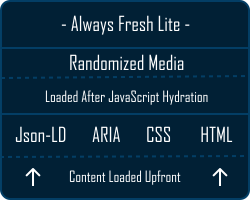
Always Fresh Lite (CMR): Freshness Without New Posts
Every page load runs Client-side Media Randomization (CMR): curated pools of photography and copy variants that reshuffle within strict guardrails. Visitors experience new compositions, bots see deterministic media and JSON-LD, all without an editorial team scrambling for weekly updates. It creates perceived freshness, encourages return visits, and protects the performance gains of a static build.
Drag-and-Drop File Integration
Adding content is as simple as dropping a file into a folder. The system is designed to auto-detect and render new assets, whether it's an image, a structured data file, or metadata. This replicates the ease-of-use of a headless CMS, but without the need for a database, admin interface, or server-side logic. The publishing workflow is fast, frictionless, and fully developer-controlled.
Client-Side Search Engine for Press Coverage
The site features an advanced client-side search and filtering system to browse through over 80 articles featuring Caroline Vreeland. Visitors can filter by publication or tag, navigate with pagination, and instantly access content, all without making a single server request. This architecture gives the impression of a rich, database-powered archive while maintaining the simplicity of a static frontend. It’s fast, scalable, and completely self-contained.
Content Strategy & Execution
The content strategy behind the site follows the same core principle as its architecture: curated, intentional, and built to scale. Rather than functioning as a news feed or social media extension, the site is designed as a timeless archive that prioritizes high-quality, legacy-defining content over time-sensitive updates. Every element is curated to emphasize Caroline Vreeland’s artistic identity, cultural relevance, and editorial presence.
The content is structured around key pillars such as press, photography, music, and public appearances, and is surfaced through interactive components designed to make discovery effortless and immersive. This includes carousel galleries, tag-based filtering, and searchable press archives, each custom-coded to feel native, seamless, and premium.
The result is a digital content platform that feels curated by a team, but was orchestrated and delivered end-to-end by one strategist-engineer.
Bot Parity & Edge Orchestration
AFL also includes a Bot Parity Layer (BPL): a pre-rendered mirror of each page where every hero image, carousel, and copy block is assembled ahead of time. Bots, AI assistants, and low-spec devices get the full experience instantly, with no client-side randomization or JavaScript gatekeeping, so they can digest the brand story without missing media. Incremental Static Regeneration quietly rotates those bot copies on a set cadence, delivering fresh creative over time while keeping every response deterministic. The business result: consistent indexing, richer AI summaries, and zero manual “keep it fresh” tasks.
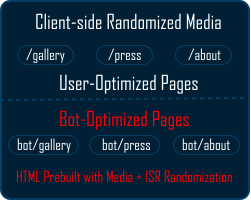
The Orchestration Layer of Rewrites (OLR) coordinates that routing logic. Edge fingerprints decide who should see which experience, SmartLink manages client-side navigation so anyone already in the bot view keeps canonical URLs while fetching bot content, and PerformanceDetector routes low-powered devices to the lighter bot layer for a smoother experience. History updates mask the swap so parity feels invisible to humans, yet precise enough for AI crawlers.
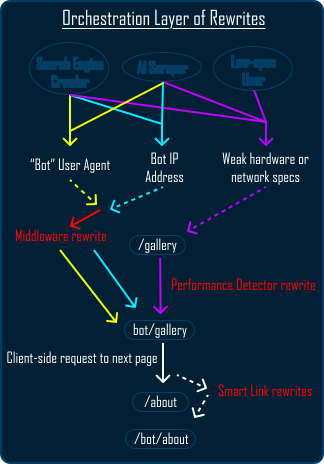
Underneath it all, Vercel-native automations refresh provider IP intelligence, revalidate ISR targets, and warm caches on a predictable cadence, keeping both human and bot experiences synchronized without manual ops. It’s an autonomous protection loop for SEO, AI discoverability, and overall site health, which lets a single strategist-engineer run a celebrity property with enterprise-grade resilience.
SEO Future‑Proofed for AI
The site is engineered not just for traditional search engine optimization, but for long-term machine readability in the age of AI-powered discovery and retrieval.
Under the hood, the site makes extensive use of semantic HTML5 structure and ARIA roles to ensure content is accessible, meaningful, and ranked appropriately by search engines. These choices support better crawling, improved page indexing, and higher placement for relevant queries.
Beyond accessibility, the platform is deeply annotated with JSON-LD structured data, the same schema used by modern AI systems for retrieval-augmented generation (RAG), rich results, and contextual understanding. Every major content type, including articles, media, and events, is marked up in a machine-consumable format, giving both search engines and large language models a reliable source of context.
Paired with the Bot Parity Layer, AI assistants such as ChatGPT, Perplexity, and Claude are deliberately routed to the fully rendered bot experience, where they ingest deterministic markup, canonical links, and structured data without any hydration lag. That means the same adaptive system that delights fans also feeds high-signal data to the models and aggregators shaping modern discovery.
By aligning the frontend experience with backend data clarity, the site maintains strong visibility today while remaining compatible with emerging AI-driven discovery patterns.
Conclusion
What began as a personal tribute evolved into a strategic, high-performance digital platform that has organically captured public attention, earned mainstream recognition, and stood the test of time.
This project demonstrates a unique blend of product thinking, technical execution, and brand sensitivity. From the frontend architecture to the content curation, every element was intentionally designed to honor a complex personal brand while showcasing best-in-class digital craftsmanship.
Its sustained relevance is the outcome of years of architectural decision-making, migrating from Joomla to Wix to a custom AFL stack, with each phase sharpening how the brand is presented, protected, and automated. More than a fan site, this is proof of concept that one strategist-engineer, iterating relentlessly, can build a premium, scalable experience end to end.
To get RitoVision on your project, please inquire below, or learn more about his visionary approach